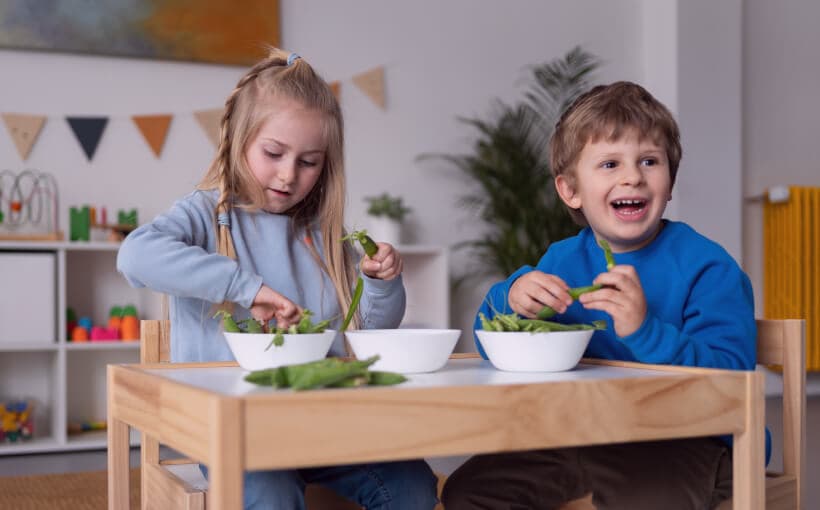
When adults see children playing, it may look like simple fun. But for a child, play is actually serious learning.
Children are naturally curious. They learn by touching, building, moving, imagining, and asking questions. Play-based learning uses this natural behaviour instead of forcing memorization.
When a child stacks blocks, they are learning balance and problem solving.
When they play pretend kitchen, they learn language and social interaction.
When they sing rhymes, they develop memory and rhythm.
Because learning happens through enjoyment, children don’t feel pressure. Their brain stays relaxed, which improves understanding and retention much better than traditional rote learning.
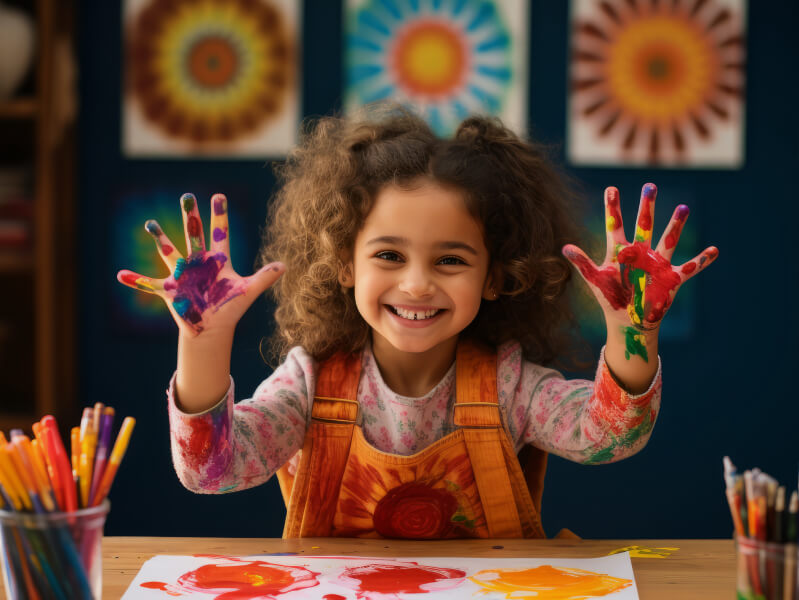
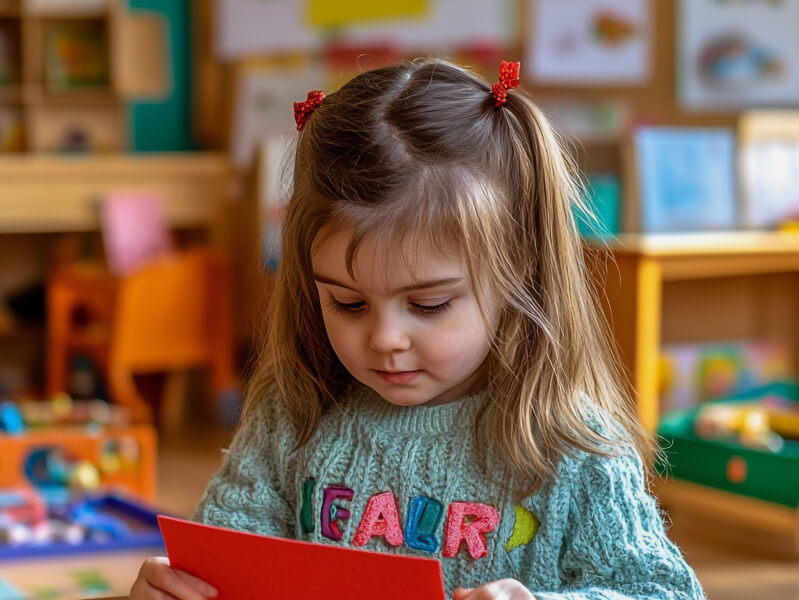
Play-based classrooms also encourage creativity. Instead of giving fixed answers, teachers guide children to explore. This builds thinking ability — a skill far more valuable than memorizing alphabets early.
Children taught through play also show better attention span. They participate willingly, not because they are told to, but because they want to.
Another big advantage is confidence. When children discover answers themselves, they feel capable. This confidence continues into higher classes where problem-solving becomes important.
Play-based learning doesn’t delay education — it strengthens it.
Because when children love learning first, academic success naturally follows.